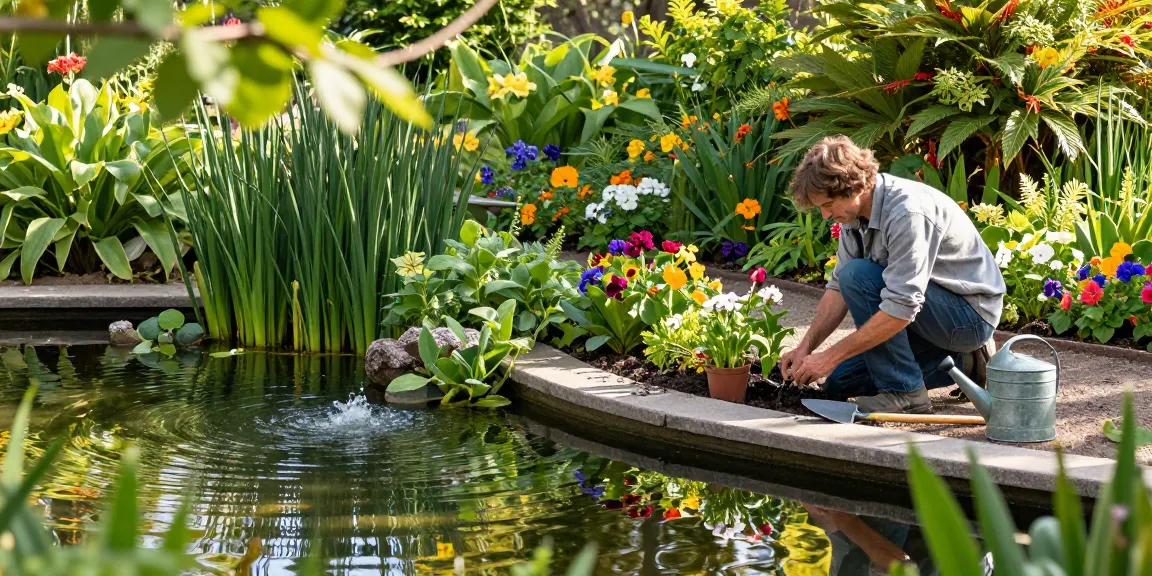
When Maria noticed her raised beds were soggy in some spots and bone dry in others, her tomato plants started dropping fruit. She’d been hand-watering with a hose after dinner, guessing at run times while juggling work and kids. That inconsistency — overwatering shallow root zones one day and barely wetting the root zone the next — is a common homeowner problem. The right drip setup matches each bed’s needs and prevents both wasted water and stressed plants.
Match the problem to the drip solution: sizing and layout
Problem: Uneven moisture across several raised beds and containers. Solution: Layout emitters by plant type and root depth.
Assess beds and plant needs
Start by mapping your garden into zones: shallow-rooted lettuces, deeper-rooted tomatoes and peppers, and individual pots. A 4x8 raised bed with mixed crops often needs two or three drip lines with different emitter spacing. For a bed of lettuces, use 0.5–1.0 gph (gallons per hour) emitters spaced every 6–12 inches. For tomatoes, choose 1.0–2.0 gph emitters at 12–18 inch spacing aimed at the root ball.
Example: A 4x8 bed with 12 tomato plants in one half and lettuces in the other can be fed using a 25 psi line with a 1.5 gph emitter per tomato and a 0.75 gph emitter per lettuce. Run times differ: lettuces may need 20–30 minutes, tomatoes 45–60 minutes depending on soil.
Layout tips that reduce loss
- Use separate manifolds or valves for different root-depth groups to avoid overtreating shallow crops.
- Run drip tubing along the plant row instead of perpendicular to it; this keeps wetted zones exactly where roots are.
- Include flush caps or a manifold with a blowout port to clear sediment at season end.
If you want a ready plan for typical raised bed layouts, check a step-by-step kit that helps you water your vegetable garden efficiently with drip irrigation — it’s the kind of resource I’d click when building the exact layout I just described.
Pressure, flow and emitter choice: how to avoid puddles and dry roots
Problem: Emitters that either spit too fast and puddle or trickle so slowly they never reach the root zone. Solution: Match system pressure to emitter specs and use pressure regulation and flow control.
Practical rules for pressure and flow
Most garden drip components are rated for 15–30 psi. Install a quality pressure regulator near the faucet or controller to keep pressure steady — this prevents the common issue of high-pressure spitting when municipal supply surges. If you have a long run (over 100 feet), increase mainline diameter to preserve flow; a 1/2" drip tubing can work for short runs, but a 5/8" or 3/4" mainline reduces pressure drop for larger gardens.
Concrete example: If you’re feeding three 50-foot beds from one spigot, calculate expected flow: 12 tomatoes at 1.5 gph = 18 gph; 20 lettuces at 0.75 gph = 15 gph; total ~33 gph (~5.5 gpm). A standard garden faucet supplies that, but you’ll need a larger-diameter mainline and probably a 1" poly manifold to avoid flow loss. Adding a RainPoint WiFi timer with a built-in flow sensor can alert you if flow drops unexpectedly.
Scheduling for root growth and water savings
Problem: Watering too often and too short (surface wetting) or so rarely the plants are stressed. Solution: Short, frequent sprays are replaced by fewer, longer watering sessions that reach the root zone.
When and how long to water
Most vegetables do best with deep, consistent moisture during the growth season. As a rule of thumb, aim to replace 1–1.5 inches of water per week for many gardens, split into 2–3 sessions. Soils with high sand content will need more frequent watering; clay soils benefit from slower, longer applications to avoid runoff. University extension services frequently recommend morning watering to reduce disease pressure and evaporation (for example, Clemson Extension provides local guidance on irrigation timing).
Example schedule table for a moderately warm region (loam soil):
CropEmitter gphSessions per weekTypical run time per sessionLettuce / herbs0.5–0.75320–30 minutesTomatoes / peppers1.0–1.52–340–60 minutesRoot crops (carrots)0.5–1.02–330–45 minutes
According to EPA WaterSense data, smart irrigation controllers can save homeowners up to 8–30% on outdoor water use; paired with efficient drip irrigation, that adds up fast. Use a timer to run longer sessions early in the morning; for example, a 45-minute run at 6 a.m. is better than two 15-minute runs in the afternoon that mostly wet the surface.
Practical maintenance and troubleshooting for reliable performance
Problem: Emitters clog, tubing shifts, roots invade lines. Solution: Seasonal checks and a few low-tech tricks keep systems humming.
Routine maintenance checklist
- Monthly: Run each zone and inspect emitters for uniform output. Replace any that read half the output of neighbors.
- Seasonal: Flush the mainline, check filters, and winterize if you have freezing temperatures. Remove and store movable soaker sections if necessary.
- Yearly: Replace worn fittings and inspect the pressure regulator and backflow preventer.
Example fix: If one emitter clogs but nearby ones are fine, remove and soak it in a vinegar solution (1:1) for 10–15 minutes, then rinse and reinstall. If many emitters are partially blocked, check the filter and sediment in the supply; a 150-micron screen filter upstream will prevent most problems.
A WiFi timer from RainPoint can automate multi-zone schedules so that you don’t forget a weekly deep soak or a mid-season adjustment — especially helpful if you travel during growing season.
Advanced tweaks to squeeze more yield from every gallon
Problem: You want higher yields but have a capped water budget. Solution: Micro-scheduling, soil moisture sensors, and targeted fertigation.
Smart tweaks that are not obvious
Install a soil moisture probe in representative spots (one for a sunny bed, one in a shaded bed). Use that probe to trigger a zone only when the soil dries below a threshold (e.g., 20–30% volumetric water content for many vegetables). That prevents unnecessary runs after a rain or when morning dew is high.
Fertigation through drip lines delivers nutrients directly to the root zone; using a small injection pump with a soluble fertilizer at 1/4 strength during each watering can increase uptake and reduce waste. Example: A gardener I worked with switched to weekly light fertigation using 0.25 gph emitters for baby greens and saw harvests come faster while reducing overall fertilizer use by 30%.
Using pressure-compensating (PC) emitters keeps output steady even at the far end of long lines — a simple upgrade that stabilizes drip output and keeps those last plants from getting shortchanged.
For additional designs and step-by-step kits to help you water your vegetable garden efficiently with drip irrigation, look for kit guides that show emitter spacing, manifold sizing, and run times tailored to common bed sizes.
Small, targeted changes — separate zones by root depth, correct pressure, automated schedules tied to soil moisture — will turn a hit-or-miss watering habit into a reliable system that saves water and boosts yields. Try one improvement at a time and note the plant response; that’s how efficient gardeners learn what works for their yard.